


14 Sep Landscape Design That Makes Property Work
A beautiful yard that cannot be used comfortably is not finished landscape design. The most successful outdoor spaces do more than create a strong first impression from the street. They give you a place to gather, a quieter view from inside, practical routes through the property, and a setting that feels considered in every season.
For homeowners, that means a backyard can become a true extension of the home rather than open space waiting to be dealt with. For commercial properties, it means an exterior that supports a professional image while standing up to daily use. The difference comes from designing with purpose before installation begins.
Landscape Design Starts With How You Live
Every property has constraints: grading, drainage, sun exposure, existing trees, access points, municipal considerations, and the architecture of the home or building. Good design does not ignore these realities in favor of a trend. It uses them to shape a plan that looks natural, performs well, and suits the people who will use it.
A family that hosts weekend dinners needs a different outdoor layout than homeowners seeking a private retreat. A front entrance may need improved curb appeal and safer circulation. A commercial site may require durable planting, clear pedestrian routes, and a polished appearance that remains consistent with limited maintenance.
The first question is not which paver or plant looks best. It is how the property needs to work. Once that answer is clear, materials, features, and planting can support a coherent vision instead of competing for attention.
Create Outdoor Rooms With a Clear Purpose
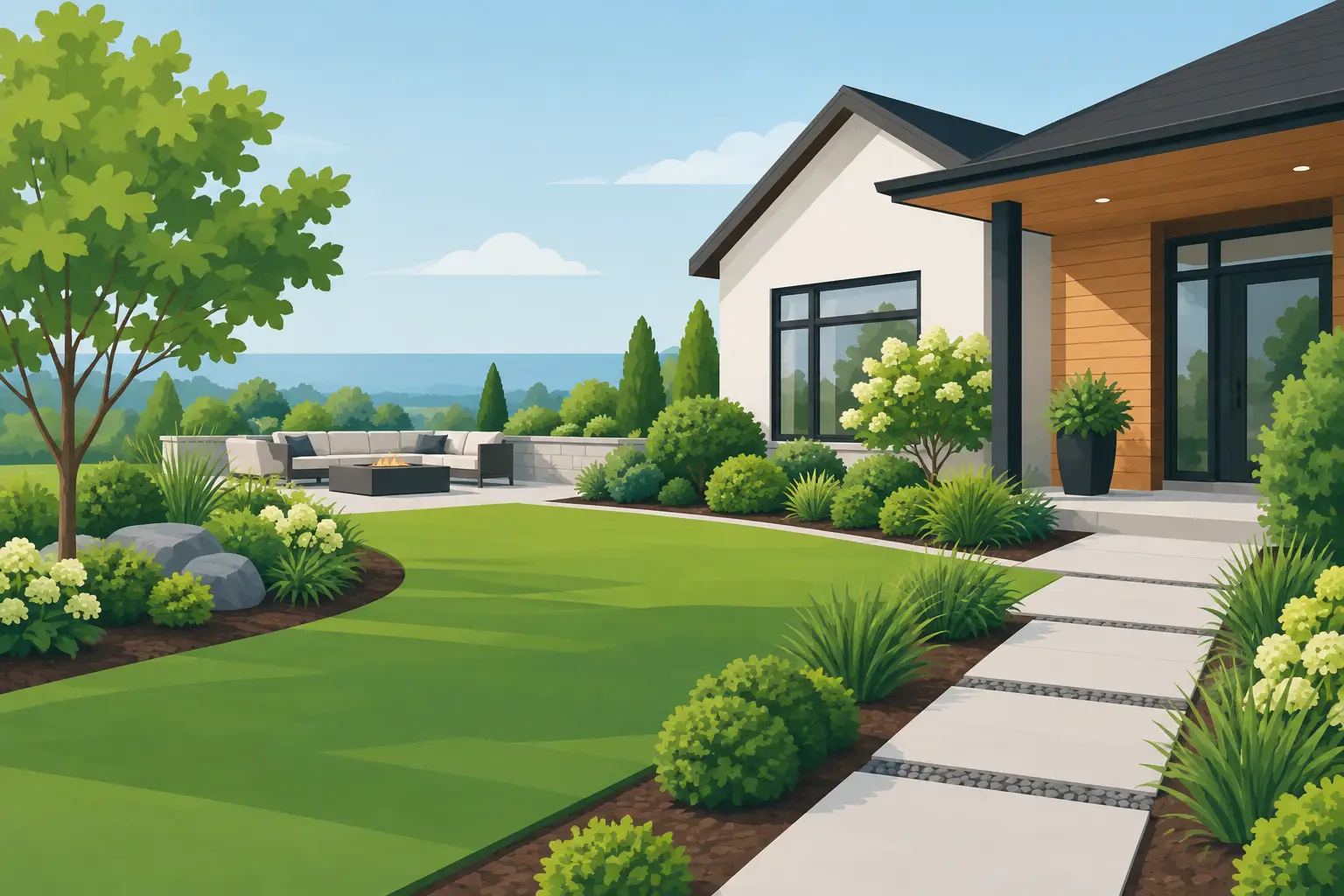
The strongest landscapes organize the property into distinct but connected areas. A patio becomes the dining room. A lounge area around a fire feature creates a natural place to linger after sunset. A pool surround needs room for circulation, seating, and maintenance access without feeling crowded. The front yard should guide guests naturally toward the entrance while framing the home rather than hiding it.
Scale matters here. An oversized patio can make a modest yard feel hard and exposed, while an undersized one leaves guests standing in the grass. A feature wall, pergola, planting bed, or change in elevation can define a space without enclosing it completely. These transitions make a landscape feel intentional and give each area a reason to exist.
Sightlines deserve equal attention. From the kitchen, living room, or primary bedroom, the view outside should feel composed throughout the year. That may mean placing an ornamental tree where it can be appreciated from indoors, screening an adjacent property, or using layered evergreens to create structure when perennial beds are dormant.
Plan Circulation Before Choosing Features
People should be able to move through an outdoor space without navigating around furniture, cutting through planting beds, or stepping onto the lawn to reach a destination. Paths, steps, gates, and patio connections should follow the way people naturally travel.
This sounds simple, yet it is one of the most common reasons a finished yard feels awkward. A beautiful stone walkway is not successful if it leads to the wrong place. Similarly, a rear yard entertaining area should connect easily to the house, especially if it will be used for meals, pool access, or carrying supplies outdoors.
Build for the GTA Climate, Not Just the First Season
In the Greater Toronto Area, landscape materials must perform through freeze-thaw cycles, heavy rain, summer heat, and winter maintenance. That makes proper base preparation, drainage planning, and installation quality just as important as the visible finish.
Interlock, natural stone, retaining walls, and steps need a stable foundation designed for local conditions. Without it, even premium materials can shift, settle, or retain water in ways that compromise the finished appearance. Drainage must be considered across the entire property, not added as an afterthought when water collects near the foundation or patio.
Planting choices also benefit from restraint and local knowledge. A layered palette of trees, shrubs, perennials, and groundcover can provide color and texture, but every selection should match the site. Sun-loving plants struggle in deep shade. A plant that looks refined at installation may outgrow its location within a few years. The best planting plans account for mature size, maintenance expectations, and seasonal interest from the start.
Sustainability is often practical rather than flashy. Native or well-adapted plantings, efficient irrigation, thoughtful grading, and healthy soil can reduce unnecessary inputs while creating a more resilient landscape. The goal is not to make a property look untended. It is to create beauty that is built to last.
Balance Privacy, Light, and Openness
Privacy is one of the most valuable improvements a landscape can offer, particularly in established neighborhoods where homes are close together. But a tall hedge along every property line is not always the right answer. It can block desirable light, reduce usable space, and create a heavy perimeter.
A more refined approach uses layered screening. Trees can add height and softness, while shrubs, fencing, architectural panels, or carefully placed structures create privacy where it matters most: beside a seating area, around a pool, or across from a neighboring window. This allows the yard to remain open and connected rather than closed off.
Lighting extends this sense of comfort after dark. The purpose is not to flood the property with brightness. Well-placed lighting makes steps safer, gives pathways definition, highlights texture in stone or planting, and creates atmosphere around gathering spaces. It should support the architecture and landscape quietly, not compete with them.
Choose Materials as a Complete Palette
Material selection sets the tone for the entire project. Natural stone can feel timeless and substantial. Contemporary pavers can bring clean geometry and consistent lines. Wood, composite, metal, and masonry each contribute a different texture and maintenance profile.
The right choice depends on the home, intended use, budget, and desired level of upkeep. A sleek modern patio may be perfect for a contemporary home but feel disconnected from a traditional brick facade. Likewise, a material that looks exceptional in a small sample should be considered at full scale, in changing light, and alongside the building exterior.
Consistency does not mean using one material everywhere. It means allowing materials to relate to one another. Repeating a stone tone in steps, coping, or a garden wall can create cohesion. Limiting the number of competing finishes often produces a more premium result than adding more variety.
Why Design-and-Build Coordination Matters
A landscape plan is only as strong as its execution. When design decisions and installation are treated as separate concerns, details can be lost between concept and construction. Grades change, materials are substituted, or features are installed without the precision needed to achieve the original intent.
A coordinated design-and-build process creates accountability from the first conversation through final installation. It allows practical construction requirements to inform the design early, while preserving the details that make the finished space feel custom. It also gives property owners one team responsible for the schedule, craftsmanship, and final result.
Redleaf Landscape Inc. has served the GTA since 1986 with this approach, combining custom planning with professional installation to create outdoor environments that are made for the property and the people who use it.
Invest Where It Changes Daily Life
Not every project needs every feature. A complete transformation may include a new patio, outdoor kitchen, poolscape, retaining walls, planting, lighting, and front-yard improvements. Another property may benefit most from solving drainage, rebuilding a failing entrance, and adding a well-proportioned entertaining space.
The best investment is usually the one that removes friction from daily life. It could be a front walk that finally makes an arrival feel welcoming, a private seating area used every evening, or planting that replaces a difficult-to-maintain lawn with structure and seasonal color. Prioritize the elements that will be seen and used most often, then build a plan that can evolve thoughtfully over time.
A well-designed landscape should feel right long after the installation crew leaves. Start with the life you want to enjoy outside, and let every material, plant, path, and detail earn its place in that vision.