


01 Aug Privacy Landscaping Ideas for a Refined Yard
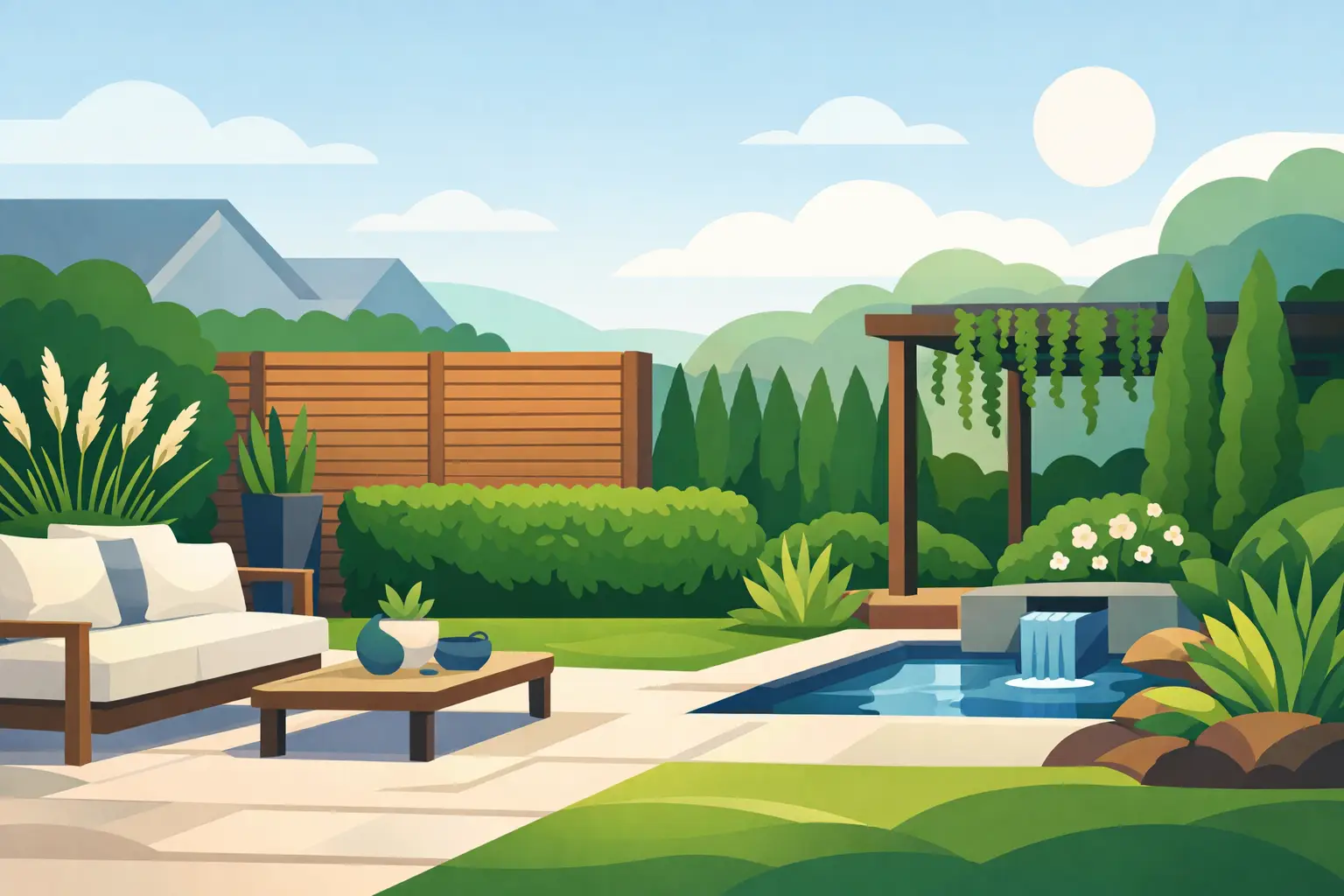
The best privacy landscaping ideas do more than block a neighboring window or soften the view of a fence. They make a backyard feel composed, comfortable, and genuinely yours. When privacy is planned as part of the larger landscape, it can frame a patio, define an outdoor room, reduce noise, and create a polished setting for quiet mornings, family time, or entertaining.
For properties across the Greater Toronto Area, that planning needs to account for more than appearance. Lot lines can be close, mature trees may already shape the yard, and changing seasons place real demands on plant material and construction. The strongest solution is rarely a single row of tall evergreens. It is a layered design that responds to sightlines, sunlight, drainage, architecture, and how you want to use the space.
Start With the View You Actually Need to Screen
Privacy is not an all-or-nothing condition. Before choosing a hedge, fence, or screen, stand in the areas where you spend time: at the dining table, beside the pool, on the deck, or looking out from the kitchen. Notice exactly where the unwanted view begins and at what height it is visible.
A second-story window requires a different strategy than a ground-level neighbor’s patio. A busy street may call for a denser planted edge, while a narrow side yard may benefit from a tailored screen that preserves valuable planting space. Screening every boundary at full height can make a property feel enclosed and reduce light and airflow. Targeting key sightlines produces a more generous result.
It also helps to think about privacy through the seasons. Deciduous trees offer beautiful shade and changing color, but their bare branches will not provide the same winter coverage. If year-round seclusion matters, evergreen structure should be part of the plan.
Privacy Landscaping Ideas That Feel Designed, Not Defensive
The most successful privacy landscapes use several elements together. Each has a role, and the combination creates depth rather than a hard visual wall.
Layered evergreens with ornamental planting
Evergreens are the foundation of many privacy gardens because they provide consistent screening through the year. Arborvitae, yew, spruce, and certain cedar varieties can be effective choices, but the right selection depends on available width, mature height, sun exposure, soil conditions, and maintenance expectations.
Rather than planting one uninterrupted line, consider setting the evergreen layer behind flowering shrubs, ornamental grasses, and perennials. This creates a fuller view from the patio and allows the planting to feel intentional from every angle. The evergreen backdrop supplies privacy; the front layer adds texture, seasonal interest, and softness.
Spacing is critical. Plants installed too closely may look full immediately, but they can compete for moisture and light as they mature. A professional planting plan considers the mature spread of each variety so the screen remains healthy and refined over time.
Architectural screens and modern fence details
A well-designed screen can deliver privacy instantly where plants need years to grow. Horizontal wood slats, composite panels, metal accents, or custom lattice can complement contemporary and traditional homes alike when proportion and material are considered carefully.
Screens work especially well around a dining terrace, hot tub, or lounge area where privacy is needed at a specific height. They can also conceal service areas without turning the entire yard into a fenced enclosure. Integrating a screen with built-in planters, climbing plants, or low-voltage lighting gives it presence after dark and makes it feel like part of the outdoor living environment.
Material choice matters in the GTA climate. Wood brings warmth but requires a considered finish and maintenance plan. Composite and metal options can offer durability and a cleaner long-term care profile, though they may need careful detailing to avoid a cold or overly manufactured appearance.
Trees that create a private canopy
Privacy is often about looking up as much as looking across. Canopy trees can filter views from taller neighboring homes while bringing shade, scale, and a sense of established character to the property.
Multi-stem trees and carefully positioned small ornamental trees can be particularly useful near patios and property edges. They soften hard architecture without creating the visual weight of a continuous hedge. In larger yards, a sequence of trees can guide views toward a focal point while obscuring less desirable outlooks.
Tree placement should respect foundations, utilities, drainage patterns, and future growth. A tree that is beautiful at installation can become a problem if it is selected or positioned without enough room to mature.
Living walls and vertical planting
In compact urban yards, the ground plane is valuable. A vertical planting system, trellis, or vine-covered structure can add green privacy without consuming the footprint needed for seating, circulation, or play.
Climbing plants are not a shortcut for every condition. They need an appropriate support system, and their performance varies with sun exposure and winter conditions. Still, when paired with a substantial trellis or screen, vertical planting can turn a narrow boundary into a lush garden feature rather than a blank wall.
Grade changes, berms, and planted focal points
A modest change in elevation can make a screen more effective without requiring an excessive fence or hedge height. Berms, raised planters, and retaining features can lift planting into the ideal sightline while creating a more dimensional landscape.
These elements need disciplined construction. Poorly designed grading can direct water toward the home, create drainage issues, or make maintenance difficult. When properly integrated, however, a planted berm can create a natural transition between a lawn, patio, and property edge while adding privacy with a much lighter visual touch.
Design Privacy Around How You Live Outside
A privacy solution should support the intended use of the yard. If entertaining is the priority, concentrate screening around the dining and lounge zones while keeping longer views open to the garden. If a family uses the lawn daily, avoid dense planting that crowds play space or makes supervision difficult. For a pool area, privacy must work alongside access, safety requirements, airflow, and the reflective quality of water.
This is where outdoor structures can make a meaningful difference. A pergola, covered pavilion, or partial roof can limit views from above while defining a destination within the landscape. Side panels, drapery systems, or integrated planting can provide additional enclosure without making the space feel shut in.
Lighting deserves equal consideration. A private garden that disappears after sunset misses much of its value. Soft path lighting, downlighting in trees, and carefully placed fixture lighting can extend the use of the space while avoiding glare into neighboring properties. The goal is a warm, controlled atmosphere, not a brightly lit perimeter.
Avoid the Common Privacy Design Shortcuts
Fast privacy is appealing, but a few shortcuts can compromise the finished landscape. Planting only one species along every property line creates a uniform wall that may be vulnerable to disease, pests, winter damage, or inconsistent growth. A mixed palette creates greater resilience and a more natural visual rhythm.
Another common issue is building a fence or screen without considering municipal rules, property surveys, and existing drainage. Height restrictions, shared boundaries, and utility access can influence what is possible. Address these constraints early, before materials are selected and construction begins.
Finally, do not treat privacy as separate from the home. A screen that conflicts with the architecture, a hedge that blocks the best garden view, or a fence that ignores the patio layout can make an investment feel pieced together. Materials, plant forms, colors, and lines should carry through the entire property.
A Custom Plan Produces Lasting Privacy
The right privacy landscape balances immediate comfort with long-term growth. It may combine a carefully crafted screen for instant seclusion, layered planting for softness, and trees that will create a mature canopy over time. That approach costs more thought than installing a standard fence or a single hedge, but it creates a setting that improves with every season.
At Redleaf Landscape Inc, privacy is approached as part of the complete outdoor environment, not an afterthought at the property line. From concept through professional installation, the details that shape growth, drainage, circulation, materials, and sightlines are considered together.
A well-planned private yard should never feel like it is hiding from the world. It should feel like a place that gives you more room to enjoy your own.