


24 Jul How to Create Outdoor Privacy That Feels Natural
A beautiful patio can still feel unfinished when every conversation, meal, or quiet morning coffee is on display. Learning how to create outdoor privacy is not simply about blocking a neighbor’s view. It is about shaping a more comfortable outdoor room – one that feels intentional, inviting, and connected to the character of your home.
The strongest privacy solutions do more than create a barrier. They frame desirable views, soften sound, manage wind, and make the yard feel more spacious rather than closed in. Whether you are improving a compact side yard, an exposed deck, or a large entertaining area, the right approach begins with understanding exactly where privacy is needed and how the space will be used.
Start With the Views You Want to Manage
Walk through your property at the times you are most likely to use it. Stand at the dining table, lounge seating, pool edge, or fire feature, then look outward. Is the concern a second-story window, a busy street, a neighboring driveway, or sightlines from an adjacent patio? Privacy is often highly specific. A solution that is too broad can make a yard feel heavy, while one placed at the right angle can solve the problem elegantly.
It also helps to distinguish between visual privacy and acoustic privacy. A screen may hide a nearby road but do little to reduce traffic noise. Dense planting can soften sound and create a calmer atmosphere, but it will not eliminate it. When both are concerns, a layered design with solid built elements and substantial planting usually delivers the best result.
Before committing to a layout, confirm property lines, local zoning requirements, fence-height rules, and the location of underground utilities. These details affect what can be built and prevent a polished design from becoming an expensive correction later.
Use Layers Instead of One Solid Wall
A single tall fence is the obvious answer to privacy, but it is not always the most attractive or effective one. It can create a boxed-in feeling, especially in smaller yards, and may cast unwanted shade over gardens or seating areas. Layering gives the landscape depth while preserving a sense of openness.
A typical privacy composition might begin with a perimeter fence for baseline screening. In front of it, a row of evergreen shrubs or small ornamental trees adds softness and seasonal structure. Closer to the patio, a pergola, planter, or decorative screen creates another layer at eye level. The result is privacy that feels integrated into the landscape rather than added as an afterthought.
Layers also allow the design to change gradually. A fence offers immediate enclosure, while plants mature over time and enrich the setting. This is particularly valuable for homeowners who want their outdoor space to feel established from the first season without sacrificing the long-term beauty of living materials.
Consider the Height of the Sightline
Privacy is rarely needed from the ground all the way to the sky. For a seated dining area, screening at approximately eye level may be enough. For a raised deck facing a neighboring second-floor window, the required height and placement may be different.
This is where custom design matters. A strategically positioned screen, lattice panel, or tree canopy can interrupt a view without turning the entire yard into a fortress. The goal is to provide comfort where it is needed while keeping sunlight, air movement, and visual interest in balance.
Choose Planting That Works Through Every Season
Living privacy screens bring texture, movement, and natural beauty to an outdoor space. They are also adaptable. Planting can follow a curved property line, soften the edge of a pool area, or create a sheltered garden room without the hard lines of a built wall.
Evergreens are often the foundation of year-round screening because they retain foliage through winter. However, an all-evergreen hedge can feel formal and visually dense if it is not carefully selected and maintained. Combining evergreen structure with deciduous shrubs, ornamental grasses, flowering plants, and multi-stem trees creates a more layered and refined effect.
Plant choice should be based on mature size, sun exposure, soil conditions, drainage, and maintenance expectations. A plant that looks modest at installation may eventually crowd a walkway, block a window, or require frequent pruning. Conversely, spacing plants too far apart can leave a privacy gap for years.
For properties with limited room, narrow upright evergreens, columnar trees, or espaliered planting can provide screening without consuming the entire planting bed. In larger settings, clusters of trees and underplanting can create a more natural, park-like sense of separation. The right solution depends on whether the property calls for a crisp architectural look or a softer garden character.
Add Architectural Screens Where Plants Cannot Do It Alone
Built privacy features are especially useful when coverage is needed immediately or when the concern is a focused sightline. Wood slat screens, decorative metal panels, masonry walls, and integrated planters can each provide a distinctive visual effect.
Horizontal or vertical slat screens are popular because they allow partial light and air movement while limiting direct views. Their spacing can be customized: tighter spacing creates greater privacy, while wider gaps preserve a lighter appearance. The material and finish should relate to other elements in the yard, such as decking, fencing, exterior trim, or outdoor furniture.
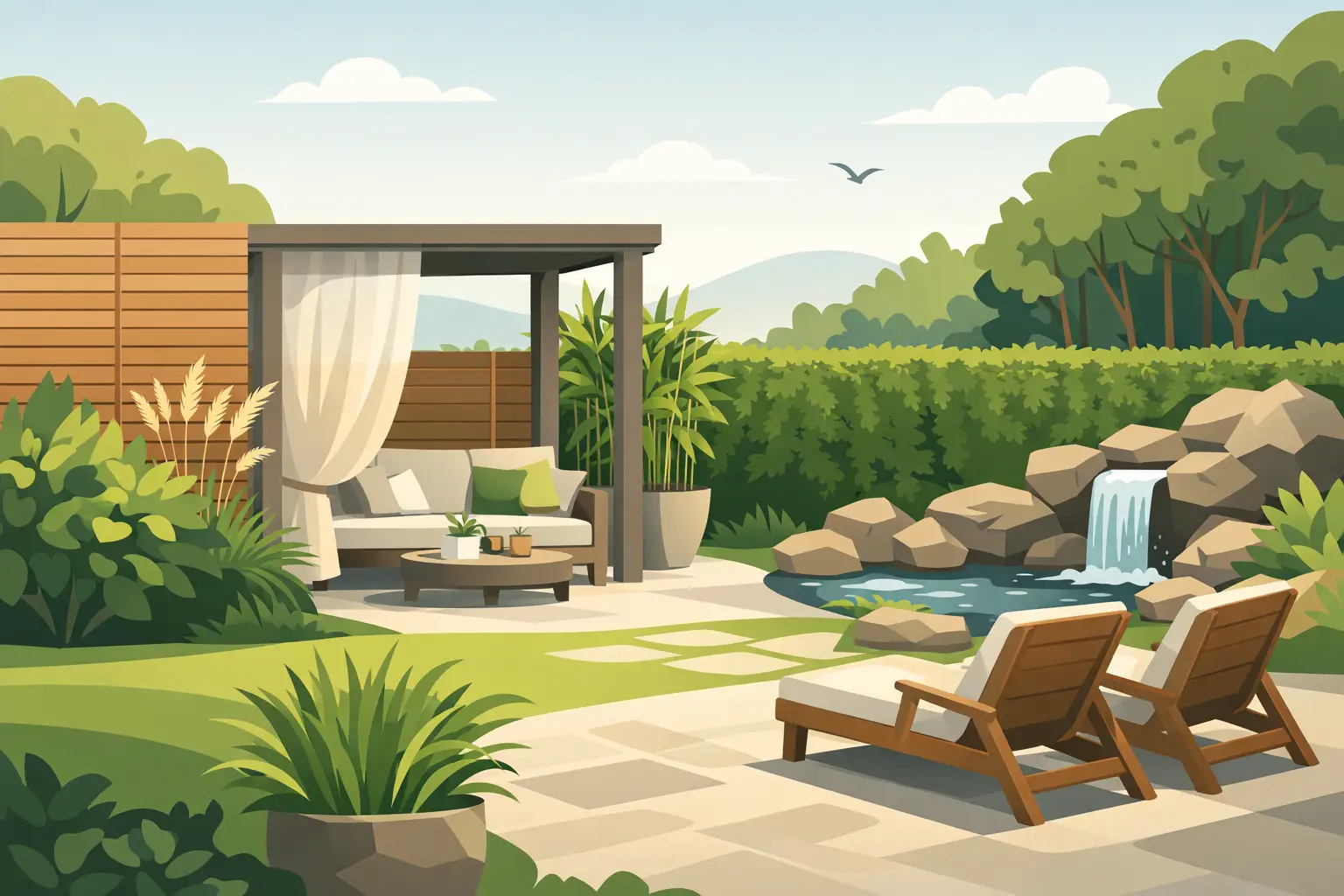
A pergola can also create privacy from above and at the sides. With a canopy, drapery, climbing plants, or adjustable louvers, it helps define an outdoor dining or lounge area while offering shade as well as seclusion. This can be especially effective for properties overlooked from upper-story windows.
Masonry or stone walls provide permanence and strong sound buffering, but they require thoughtful detailing to avoid feeling imposing. Built-in seating, planting pockets, lighting, or changes in material can make a wall feel like part of an outdoor living environment rather than a boundary alone.
Design Privacy Around How You Entertain
The best outdoor spaces are planned around real routines. A family that hosts long summer dinners may need a private dining terrace with easy access to the kitchen. A homeowner who wants a peaceful retreat may prioritize a screened lounge area, water feature, and surrounding planting. A pool setting may need privacy at changing areas, seating zones, and the property perimeter, without compromising safety or visibility.
Circulation matters as much as screening. Guests should be able to move from the house to the patio, grill, garden, or pool without passing through a cramped corner. When privacy elements are positioned to guide movement, they can make the property feel more organized and expansive.
Consider what happens after dark as well. Low-voltage landscape lighting can highlight trees, textured screens, and planting while making the space feel secure. Avoid placing bright fixtures where they create glare or draw attention toward neighboring properties. Warm, controlled lighting keeps the focus on your own outdoor environment.
Avoid the Common Privacy Shortcuts
Temporary fabric panels, mismatched container plants, and a single row of undersized shrubs may provide a quick fix, but they rarely deliver lasting value. They can look disconnected from the home and may fail after one season of wind, weather, or growth.
Overbuilding is another common mistake. A tall, continuous barrier may solve a visibility issue but can reduce daylight and make a yard feel smaller. It may also create drainage challenges or conflict with local regulations. A more considered design often uses a combination of lower boundaries, targeted screening, and planting to produce a more comfortable result.
Privacy should also be coordinated with grading and drainage. Water needs a clear path away from the home and away from planting beds, patios, and structures. Addressing these functional requirements during design protects the investment and supports the long-term health of the landscape.
How to Create Outdoor Privacy With a Cohesive Plan
A successful privacy plan should look as though it has always belonged to the property. That means aligning materials, planting, proportions, and function with the architecture of the home and the way the yard is used. A contemporary residence may suit clean-lined screens, structured evergreens, and large-format paving. A more traditional property may call for layered hedging, stonework, and softer planting forms.
At Redleaf Landscape, custom outdoor living environments are approached as complete compositions, not isolated features. Careful planning brings fencing, planting, patios, lighting, and circulation together so each element supports the next. That level of coordination is what turns privacy from a practical concern into a defining part of the landscape.
A private yard should not feel hidden from the world at the expense of beauty. It should feel like the place where your home naturally extends outdoors – comfortable enough for an unhurried morning, polished enough for guests, and personal enough to reflect how you want to live.