


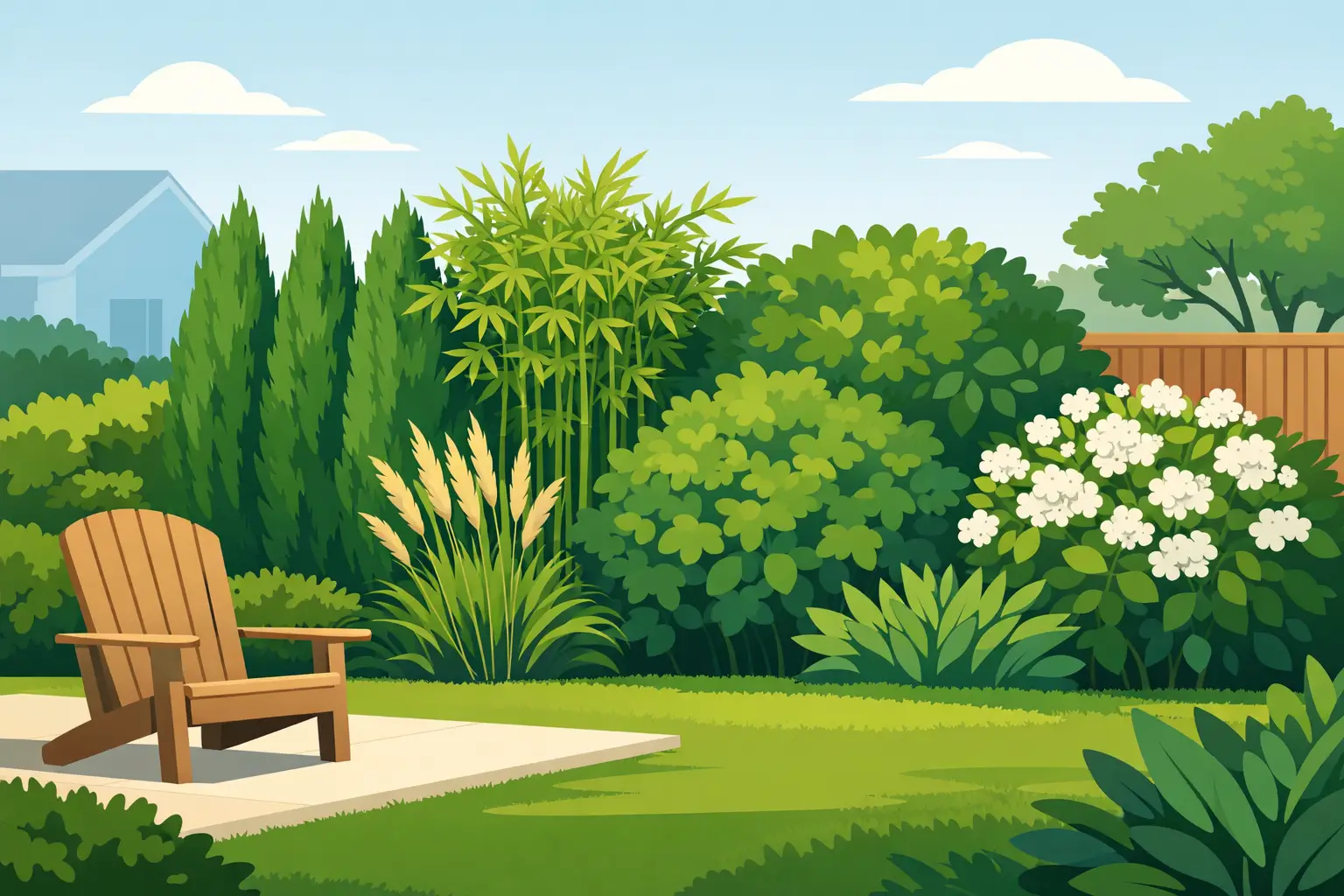
16 Jun Best Backyard Planting for Privacy Screens
A backyard can look finished on paper and still feel exposed in real life. The patio is in place, the pool is set, the outdoor kitchen is ready to use – and then you sit down and realize the sightline from the next property cuts straight across the space. That is usually the moment homeowners start asking about the best backyard planting for privacy screens.
The right screen does more than block a view. It shapes how the yard feels, softens hard edges, reduces noise, and gives outdoor living areas a stronger sense of enclosure. Done well, privacy planting becomes part of the design language of the property rather than a green wall added as an afterthought.
What makes the best backyard planting for privacy screens
There is no single plant that solves every privacy problem. The best choice depends on what you need to screen, how quickly you want coverage, how much space you can give up, and whether you want year-round density or seasonal softness.
A narrow side-yard condition calls for a different solution than a wide rear property line. Screening a second-story overlook is different from blocking eye-level visibility at a patio. Some clients want a formal evergreen backdrop that reads as clean and architectural. Others want a softer, more natural layered border that feels integrated with the rest of the landscape.
The strongest privacy screens usually balance five factors: mature height, mature width, growth rate, density, and maintenance. Fast-growing plants can be appealing, but they are not always the cleanest long-term performers. Slower growers often offer better structure and fewer pruning issues, though they require patience and proper planning.
Start with the sightline, not the plant
This is where many privacy projects go wrong. Homeowners often choose a plant first and then try to make it work. A better approach is to stand where privacy matters most – seated on the patio, in the spa, at the dining area, or inside the home looking out – and identify exactly what needs to disappear.
If the issue is a direct view from a neighboring deck, the planting may need height in a very specific zone rather than across the full property line. If the concern is general exposure from multiple angles, a layered planting bed can create a broader visual buffer. When the yard is compact, even a few feet of bed depth needs to work hard, so plant selection and spacing become critical.
This design-first approach leads to a screen that feels intentional. It also prevents the common mistake of overplanting, where material goes in too tight, grows into itself, and becomes expensive to correct later.
Evergreen choices for reliable coverage
For many properties, evergreens are the foundation of the best backyard planting for privacy screens because they hold their structure through winter. In climates with bare deciduous trees for several months of the year, that consistency matters.
Arborvitae remains one of the most requested options, and for good reason. It offers a clean vertical form, dependable density, and a polished look that works with both traditional and contemporary homes. The key is choosing the right variety. Some stay narrow and upright, while others become far too broad for tighter conditions. Arborvitae can create an excellent living wall, but only when spacing, soil preparation, and drainage are handled properly.
Spruce is another strong option when clients want something more substantial and natural in character. It tends to read less formal than arborvitae and can provide impressive year-round coverage, though it generally needs more room. In larger yards, spruce can anchor a boundary beautifully. In smaller lots, it may eventually feel oversized.
Yew can also be effective, particularly where a refined, darker green mass suits the architecture. It tolerates shaping well and can deliver a more tailored appearance. That said, it does not solve every site issue. Poor drainage and heavy winter exposure can limit performance, so placement matters.
When a mixed screen works better than a hedge
A continuous hedge is not always the best answer. In many premium residential landscapes, a mixed planting screen delivers a stronger result because it feels more custom, more dimensional, and less like a property-line barrier.
Layering trees, large shrubs, and mid-level plant material creates depth that a single row cannot. You might use upright evergreens for height, broadleaf shrubs for mass, and ornamental grasses or perennials to soften the edge closest to the lawn or patio. This approach screens views while preserving a more natural and curated appearance.
Mixed screens also reduce the all-or-nothing risk of monoculture planting. If one species struggles, the entire privacy line does not fail visually at once. From a design standpoint, the variation in texture and form often looks more sophisticated than a single repeated plant.
This is especially useful in backyards designed for entertaining. A layered screen can make an outdoor dining area feel sheltered without making it feel boxed in. It gives the space privacy and atmosphere at the same time.
Fast growth versus long-term performance
Speed is usually part of the conversation. Most homeowners want privacy as soon as possible, which is understandable. But the fastest-growing plants are not automatically the best investment.
Aggressive growers can become thin at the base, prone to storm damage, or demanding in terms of pruning and cleanup. Some outgrow their location quickly and end up competing with fences, paving, or adjacent plantings. Others provide quick seasonal cover but lose effectiveness when leaves drop.
A better strategy is often to start with quality plant material at a meaningful size and install it correctly. Healthy, properly spaced stock in well-prepared soil will often outperform cheaper, smaller, or poorly selected material over time. The screen may take a little longer to fully mature, but the result is stronger, cleaner, and more durable.
For clients who need faster impact, combining structural evergreens with complementary deciduous material can help fill visual gaps while the permanent planting establishes.
Design details that matter more than most people expect
Privacy planting is not just about what goes in the ground. Bed shape, grade, mulching, irrigation, and edging all influence how the finished screen performs and how it is perceived from the house.
A straight line of shrubs along a fence may provide coverage, but it can also feel flat and utilitarian. A thoughtfully shaped planting bed with subtle curves or staggered groupings usually looks more integrated. In some cases, raising the bed slightly can improve both drainage and screening power, giving plants a height advantage without relying entirely on species selection.
Spacing is one of the biggest quality markers. Plants installed too tightly may look full on day one, but they often create long-term problems. Good craftsmanship means planning for maturity, not just immediate effect. That is where professional design and installation make a visible difference.
Maintenance access should also be considered from the beginning. If a screen is planted too close to a fence or structure, pruning and care become difficult. Over time, that affects health and appearance.
Best backyard planting for privacy screens in real-world conditions
Every site has constraints. Narrow urban lots, pool setbacks, utility lines, shade, wet soil, and deer pressure all affect what will work. That is why the best backyard planting for privacy screens is always site-specific.
If your yard is small, columnar evergreens or tightly edited layered planting may give you privacy without sacrificing usable square footage. If your property is larger, broader material with varied texture can create a more natural estate-like feel. If the goal is to soften the view around a pool or lounge area, you may want screening that feels lush without dropping excessive debris.
For homes with a strong architectural style, the planting should support that identity. Clean lines and restrained repetition often suit modern properties. More varied and naturalistic combinations tend to work well with classic homes and larger family yards. The point is not simply to hide the neighbor. It is to make privacy feel built into the landscape.
That is where an experienced design-build approach adds real value. A firm like Redleaf Landscape Inc understands that privacy is rarely a standalone feature. It is part of how the entire outdoor environment functions, looks, and feels year after year.
The best privacy screen is the one that solves the exposure problem without creating new ones. When planting is chosen with the site, the architecture, and the way you actually use the yard in mind, privacy stops feeling like a fix and starts feeling like part of the design. If your outdoor space is meant to reflect the way you live, the screen around it should do the same.