


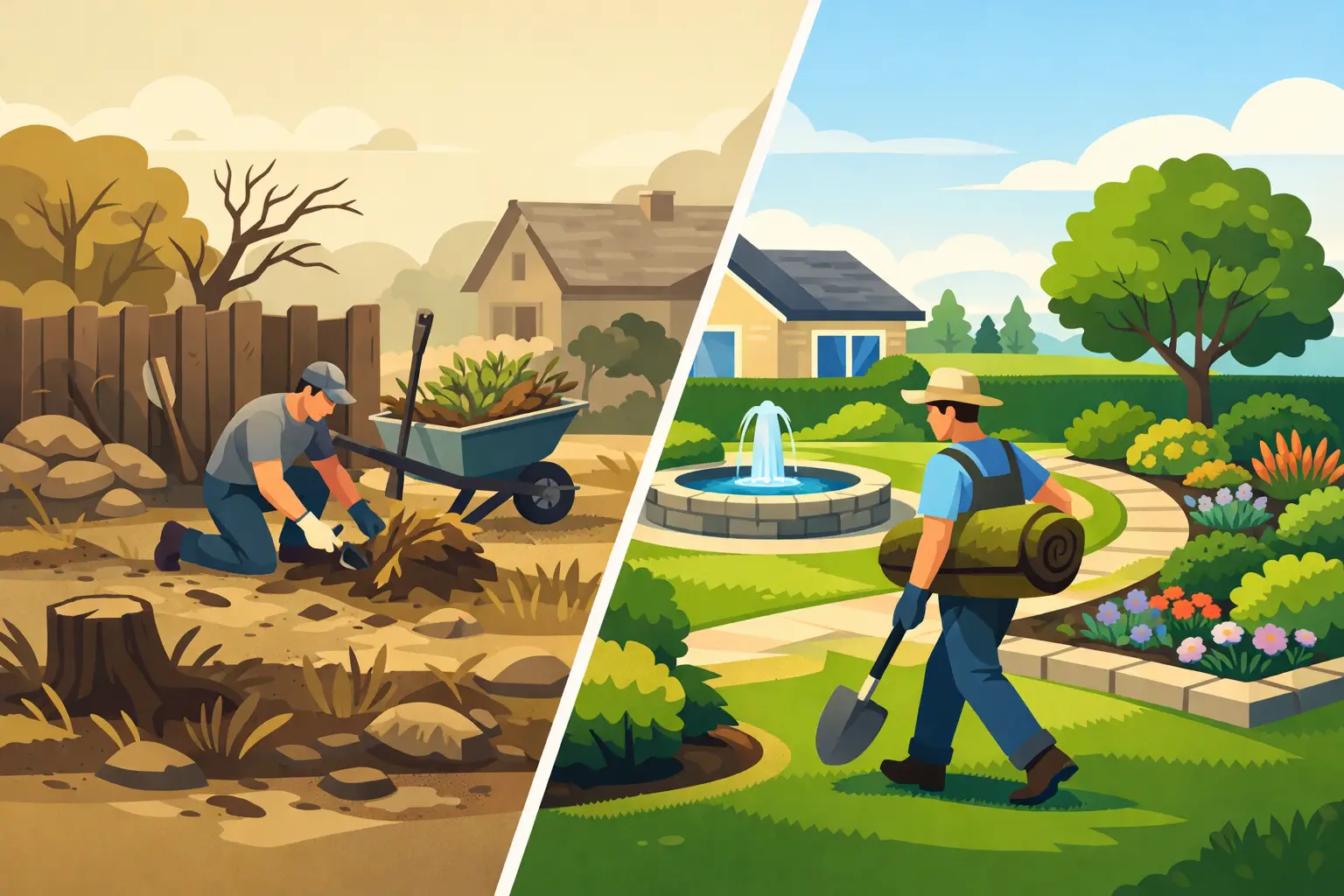
31 May Landscape Renovation vs New Installation
A tired backyard does not always need a full reset. Sometimes the smartest move is to rebuild what is already there with better structure, stronger materials, and a clearer plan. Other times, starting fresh is the only way to create an outdoor space that truly fits the home. That is the real question behind landscape renovation vs new installation – not which option sounds bigger, but which one delivers the right result for your property.
For homeowners investing in a premium outdoor space, the decision should come down to function, condition, and long-term value. A well-executed renovation can preserve useful assets and improve the flow of the property. A new installation can remove years of compromise and give the design team a clean foundation. The better choice depends on what exists now, what is failing, and what you want the space to do five or ten years from now.
What landscape renovation really means
A landscape renovation upgrades and reworks an existing outdoor environment rather than replacing everything from the ground up. That may include rebuilding a patio, regrading problem areas, updating planting beds, improving drainage, replacing worn steps or retaining walls, modernizing lighting, or reshaping the layout so the yard functions better.
In strong renovations, the goal is not cosmetic patchwork. It is thoughtful improvement. Mature trees may stay. Certain hardscape elements may be reused if they are structurally sound. The circulation of the space may be improved without tearing out every square foot. When the bones of the property still have value, renovation can be a disciplined and efficient path.
This approach often makes sense for established homes where the landscape has potential but no longer supports how the owners live. Maybe the patio is undersized for entertaining. Maybe the front entry lacks presence. Maybe the plantings are overgrown and the drainage is poor. The space is not beyond saving, but it needs expert redesign and proper execution.
What a new installation involves
A new installation is a complete landscape build, usually on a blank site or on a property where the existing conditions need full removal. This is common with new construction, major additions, or older properties where previous work was pieced together over time and no longer serves the home.
With a new installation, every layer can be considered together – grading, drainage, hardscape, planting, lighting, outdoor living features, and circulation. That creates more freedom in the design and fewer compromises in the final result. If your goal is a fully integrated outdoor environment with strong visual cohesion, this route often provides the cleanest outcome.
It also gives you the chance to solve hidden issues before they become expensive. Poor base preparation, improper slopes, failing retaining walls, and outdated layouts are easier to address when the entire site is being rebuilt with intention.
Landscape renovation vs new installation: the deciding factors
The most practical way to compare landscape renovation vs new installation is to look beyond surface appearance. A property can look worn and still be a strong candidate for renovation. Another can look acceptable at first glance while hiding enough structural problems to justify starting over.
The condition of what already exists
If patios are heaving, walls are shifting, drainage is moving water toward the house, or the grading is fundamentally wrong, renovation can become more complex than expected. At a certain point, preserving old work starts costing more than replacing it properly.
On the other hand, if the hardscape base is sound, the mature plant material is healthy, and the layout only needs refinement, renovation can deliver excellent value. The key is honest evaluation. Premium results come from understanding what is worth saving and what is not.
Your design goals
If you want to enlarge a patio, add landscape lighting, refresh the front approach, and improve the planting plan, a renovation may be enough. If you want an outdoor kitchen, multiple entertainment zones, new walkways, integrated drainage, privacy planting, and a stronger relationship between the house and the yard, a full installation may be the better fit.
Large ambitions placed on a small existing framework often create design strain. The more transformative the vision, the more important it is to assess whether the existing site can support it without compromise.
Budget allocation
Many property owners assume renovation is always the less expensive option. Sometimes it is. Sometimes it is not. Selective demolition, tying new materials into old ones, and working around existing features can add labor and complexity.
A new installation usually carries a higher upfront investment because more of the site is rebuilt. But it can also provide more predictable performance and fewer future corrections. A cheaper short-term decision is not always the better financial decision if it leaves underlying issues untouched.
Timeline and disruption
Renovations can be faster when the scope is focused and much of the site remains intact. They can also stretch if hidden conditions are uncovered once work begins. New installations are more extensive by nature, but the process is often more straightforward because the site is approached as one coordinated system.
For busy homeowners, the real issue is not just duration. It is how much uncertainty is involved. A clear design-build process helps reduce surprises in either scenario.
When renovation is the smarter investment
Renovation tends to be the right path when the property already has meaningful assets. Mature trees, well-placed hardscaping, and a generally functional layout can all be worth preserving. In these cases, the focus shifts to refining the experience of the space rather than rebuilding its entire structure.
This option is especially strong when the goal is to improve usability and elevate the look of the property without erasing its character. An older yard can be reshaped into something far more polished through better materials, stronger planting composition, improved lighting, and cleaner transitions between zones.
For established neighborhoods, renovation also allows the landscape to evolve with the home rather than feel disconnected from it. The result can feel settled, intentional, and highly personal.
When new installation makes more sense
A new installation becomes the stronger choice when the site lacks cohesion or the existing work was never done to a lasting standard. If every improvement has to work around old mistakes, the final outcome may still feel compromised.
This is often the right move for properties where outdoor living is being treated as a true extension of the home. If you are investing in a premium backyard experience, design flexibility matters. Building from a clean slate allows every element to work together, from grading and drainage to paving patterns, screening, lighting, and plant selection.
For commercial properties, new installation can also make operational sense when first impressions, durability, and circulation all need to be addressed at once. A cohesive exterior sends a stronger message than a series of isolated fixes.
The role of design in both options
Whether you renovate or start fresh, the design phase determines the quality of the outcome. This is where surface decisions give way to professional judgment. How will water move? Where will people gather? What views should be framed or softened? Which materials will age well? Which planting strategy will support the look without creating unnecessary maintenance problems?
Without that level of planning, renovation can become patchwork and new installation can become expensive overbuilding. The strongest landscapes are not simply attractive. They are balanced, durable, and aligned with how the property is actually used.
That is why an end-to-end design-build approach matters. A team that understands both the design intent and the realities of installation can make sharper decisions about what to preserve, what to rebuild, and how to deliver lasting quality. For clients who want one accountable partner from concept to completion, that clarity is worth a great deal.
Choosing based on the future, not just the present
The best landscape decisions are rarely about what looks easiest this season. They are about what will still feel right after years of use. A renovation can be the disciplined choice when the foundation is there and the improvements are strategic. A new installation can be the better investment when the property needs a complete rethinking to perform at a higher level.
For GTA homeowners who want more than basic landscaping, this decision deserves a careful eye. Redleaf Landscape Inc has been serving the region since 1986, and that kind of experience matters when weighing preservation against transformation. The right path is the one that respects the property, supports the way you live, and delivers craftsmanship you can see long after the project is finished.
If you are deciding between renovating and starting over, look past the immediate fix and ask a better question: what kind of outdoor space does this property deserve next?