


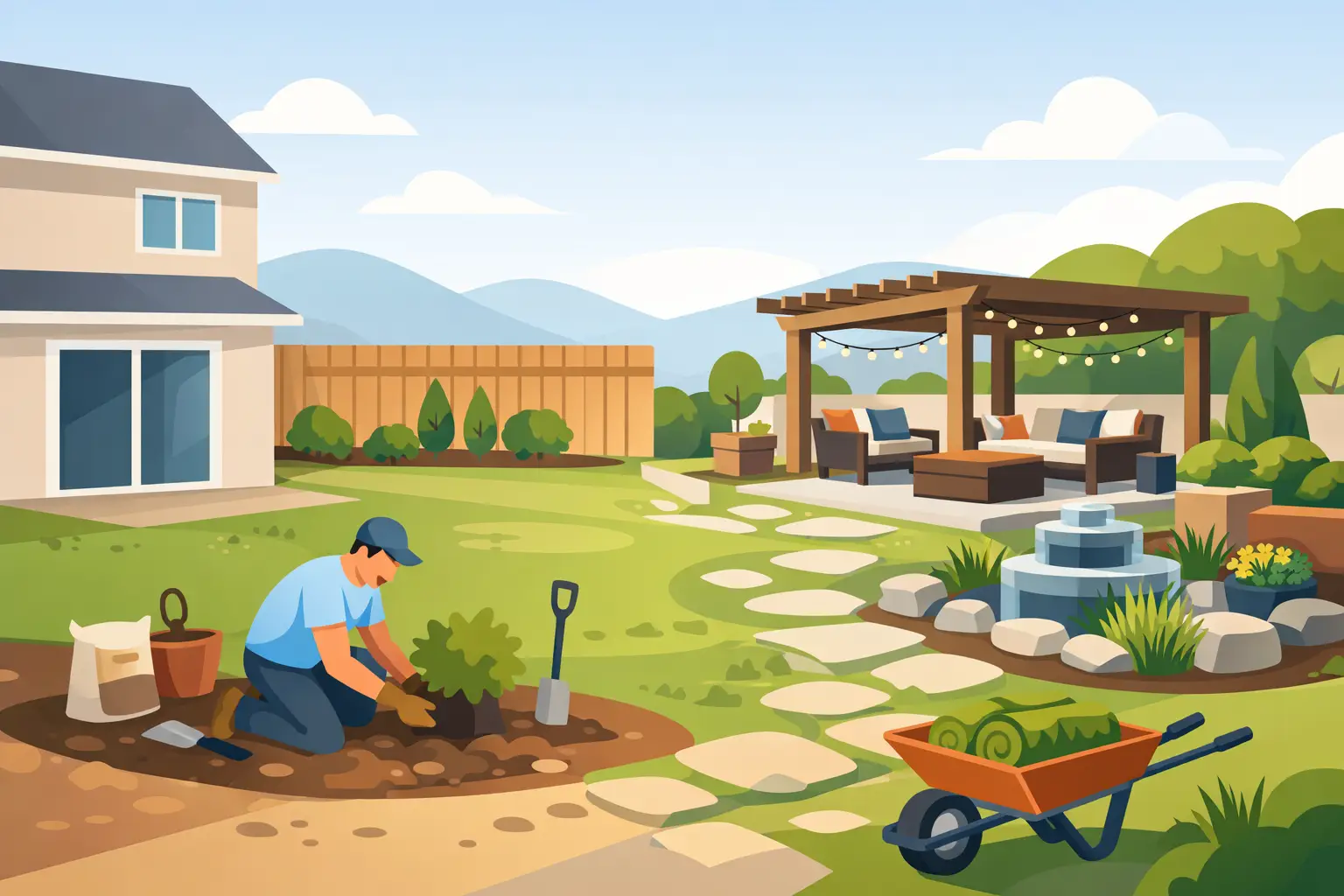
19 May How to Upgrade a Builder Grade Yard
Most builder grade yards all share the same problem: they were finished just enough to check a box. A patch of lawn, a small patio if you are lucky, a few undersized shrubs, and very little thought given to how the space actually feels or functions. If you are wondering how to upgrade a builder grade yard, the goal is not to add more for the sake of it. The goal is to create an outdoor space that looks intentional, works for your lifestyle, and feels connected to the home.
A well-designed yard should solve problems before it adds features. It should improve how you move through the space, where you gather, how much maintenance you take on, and what the property says from the street. That is the difference between a basic landscape and one that adds lasting value.
Why builder grade yards feel unfinished
Builder grade landscaping is usually designed around speed, cost control, and broad appeal. That approach gets a property to occupancy, but it rarely creates depth, privacy, comfort, or a strong visual identity. The result is often a yard that feels flat and exposed, with too much open lawn and not enough structure.
The issue is not always size. Even large backyards can feel underwhelming if they have no focal point, no defined zones, and no material contrast. Front yards often suffer from the same problem. They may be neat, but they lack the planting layers, hardscape detailing, and architectural balance that make a home feel polished.
How to upgrade a builder grade yard starts with function
Before choosing stone, plants, or lighting, look at how the yard needs to perform. A family with young children needs different priorities than a couple who hosts outdoor dinners or a homeowner focused on curb appeal and resale. Good landscape design starts by answering practical questions first.
Think about where people enter the yard, where they naturally want to sit, and what areas need privacy or shade. Consider drainage, sun exposure, and how much seasonal maintenance is realistic. These decisions shape every upgrade that follows. Without that foundation, even expensive additions can feel disconnected.
For many properties, the most effective improvement is to divide the yard into clear use areas. One section may be dedicated to dining, another to lounging, another to lawn or open play. This creates order and gives the space a sense of purpose. It also makes a yard feel larger because each area has a defined role.
Invest in hardscape first
If the yard feels temporary, hardscape is often what is missing. Patios, walkways, retaining walls, steps, and edging create permanence and structure. They establish the bones of the landscape and give everything around them a more finished appearance.
This is where material choice matters. Builder grade yards often rely on small concrete pads or basic poured surfaces that do not complement the home. Upgrading to higher-quality pavers, natural stone, or well-detailed concrete can change the entire character of the property. The right hardscape does more than look better. It improves drainage, creates safer transitions, and defines outdoor living space in a way grass alone never can.
There is a trade-off here. Premium materials cost more upfront, but they tend to perform better and elevate the property in a more lasting way. If budget needs to be phased, it is usually smarter to complete one hardscape area properly than to spread the investment too thin across several smaller features.
Use planting to add depth, privacy, and softness
Planting is where a builder grade yard often shows its limitations. Sparse shrubs pushed against the foundation do little to frame the house or soften the property. A stronger planting plan uses layers, texture, and scale to create visual depth.
In the front yard, this might mean a mix of evergreen structure, flowering accents, ornamental grasses, and lower perennials that guide the eye toward the entrance. In the backyard, planting can define the perimeter, screen neighboring views, and make entertaining areas feel more comfortable and enclosed.
Privacy is one of the most common priorities, especially in newer subdivisions where homes sit close together. That does not always require a solid wall of identical evergreens. In many cases, a better solution is a layered screen using trees, shrubs, and strategic fencing. It looks more natural, feels less harsh, and often performs better over time.
A sustainable planting approach is also worth considering. Choosing species that are suited to local conditions helps reduce water demand, improve resilience, and lower maintenance pressure. A landscape should look refined, but it should also be practical to live with.
Create a real outdoor living area
One of the fastest ways to elevate a backyard is to treat it as an extension of the home rather than leftover exterior space. A builder grade yard becomes more valuable the moment it supports real use.
That usually starts with a properly sized patio. Not a pad that barely fits a table, but a space designed around furniture layout, circulation, and comfort. If you entertain often, you may want dedicated room for dining and lounging. If your priority is quiet family use, a smaller but more intimate setting may make sense.
From there, details matter. Seat walls, pergolas, privacy screens, outdoor kitchens, fire features, and integrated lighting all increase comfort and usability. Not every yard needs every feature. In fact, restraint often produces a more elegant result. The right question is not what can fit, but what will be used consistently and what aligns with the architecture of the home.
Pay attention to the front yard
Backyards get most of the attention, but front yard improvements often deliver the strongest first impression. If the goal is to move beyond builder grade, curb appeal needs more than a fresh mulch bed.
A wider front walk, upgraded entry steps, landscape lighting, and stronger foundation planting can completely shift how the home is perceived. These elements create rhythm and proportion. They also reinforce a sense of care and quality before anyone reaches the front door.
This is especially important for homes with attractive architecture that gets lost behind minimal landscaping. The landscape should support the house, not compete with it and not leave it visually exposed.
Lighting is the upgrade homeowners often overlook
A yard can be beautifully designed and still feel incomplete after sunset. Lighting adds dimension, safety, and atmosphere. It extends how long the space can be enjoyed and gives the property a more refined presence at night.
Path lights, step lights, uplighting on feature trees, and subtle illumination around patios or seating areas can make a major difference. The key is control and restraint. Too much lighting feels harsh. A thoughtful plan highlights movement, texture, and architecture without overwhelming the space.
For busy homeowners, lighting is also one of the most practical improvements. It works every evening, improves visibility, and enhances the sense of arrival without adding maintenance.
Know when a piecemeal approach stops making sense
Some upgrades can be tackled in phases. Others benefit from a full plan from the start. If drainage is poor, grades are awkward, or multiple features need to work together, patchwork improvements often lead to mismatched materials and expensive rework.
That is where professional design and build becomes valuable. A cohesive plan helps prioritize spending, align details with the home, and ensure each element supports the next. For homeowners who want a finished result rather than a series of disconnected upgrades, having one accountable team from concept through installation usually produces a stronger outcome.
Companies with a design-build process, like Redleaf Landscape Inc, bring another advantage: execution quality. A good concept only matters if the grading, stonework, planting, and finishing details are handled properly. In premium landscaping, craftsmanship is not a finishing touch. It is the project.
What makes the upgrade feel custom
The difference between a better yard and a truly elevated one usually comes down to cohesion. Materials should relate to the home. Planting should feel intentional, not generic. Outdoor spaces should support how you actually live rather than imitate a showroom.
Sometimes that means less lawn and more usable square footage. Sometimes it means solving privacy with layered planting instead of a taller fence. Sometimes it means investing in one beautifully built patio and a sophisticated planting plan rather than scattering the budget across too many ideas.
A custom landscape does not need to feel elaborate. It needs to feel resolved. When the layout is clear, the materials are well chosen, and the details are executed with care, the yard no longer reads as builder grade. It feels like it belongs to the property and to the people who live there.
The best place to start is not with a shopping list of features. It is with a clear vision of how you want the space to look, function, and feel a year from now. Once that vision is in place, every upgrade has a purpose.