


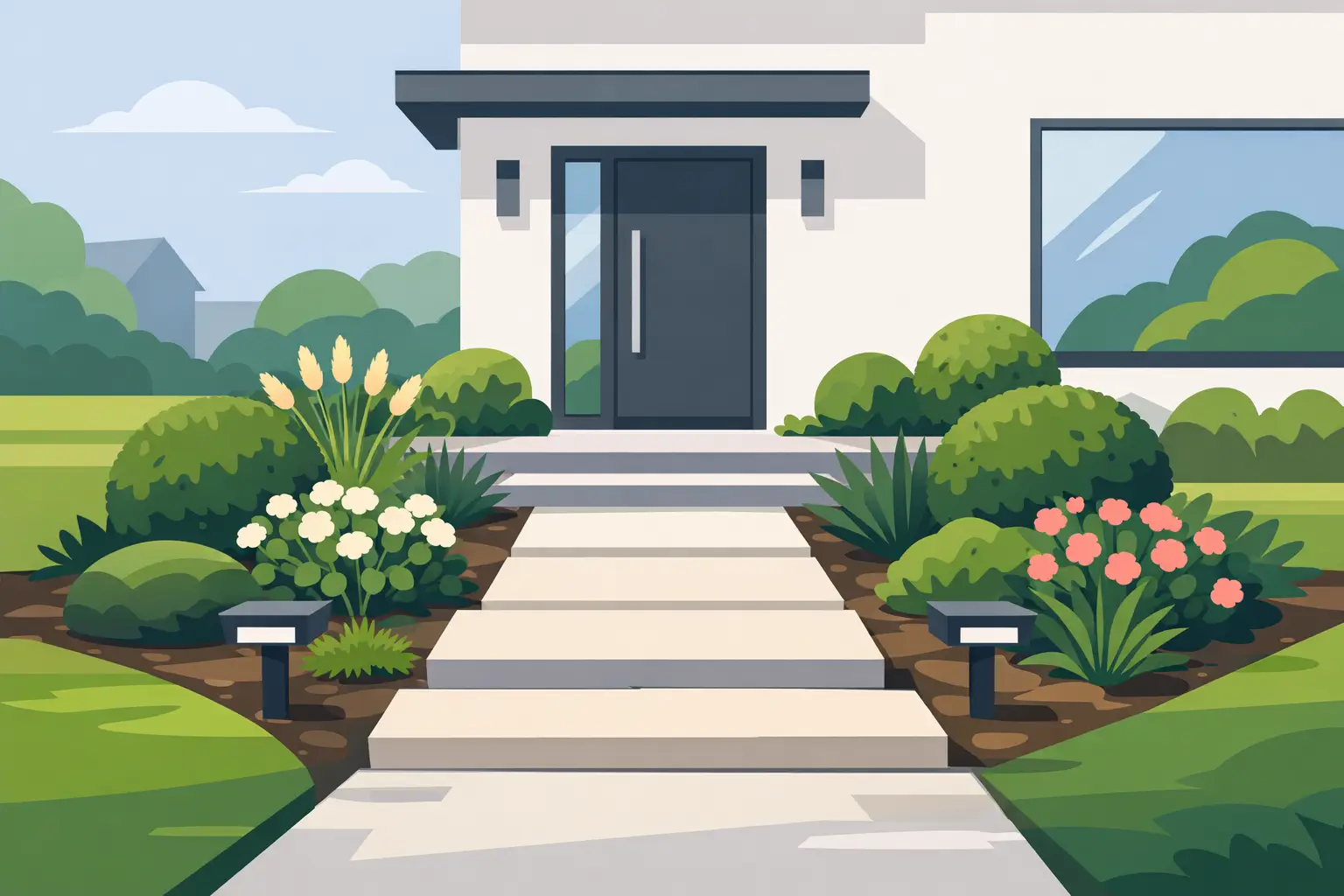
13 May How to Create a Front Entrance Landscape
The front entrance does more than welcome guests. It sets expectations before anyone steps inside. If you are wondering how to create a front entrance landscape that feels polished, functional, and true to your home, the answer starts with design discipline, not decoration.
A strong entrance landscape should guide movement, frame the architecture, and hold up through every season. It should feel intentional from the curb and even better up close. For homeowners investing in a premium exterior, this is not about adding a few shrubs by the porch. It is about creating a composed arrival experience that adds value and makes the property feel complete.
Start with the approach, not the plants
One of the most common mistakes in front yard landscaping is choosing plants first. Planting matters, but the entrance works best when the structure is resolved before the softer details go in.
Begin with how people actually arrive. Look at the path from the driveway, the sidewalk, or the street. Is it clear where guests should walk? Does the route feel direct and comfortable, or does it cut awkwardly across the yard? A front entrance should lead people naturally to the door without confusion.
This is where layout matters. Walkways should be sized generously enough to feel welcoming, especially if two people are likely to walk side by side. Steps should feel balanced with the scale of the house. If the grade changes, retaining and stair design need to feel integrated, not added on as an afterthought.
When the hardscape is right, the rest of the landscape has a framework to support it.
How to create a front entrance landscape with architectural balance
A front entrance should feel connected to the home, not styled independently from it. The materials, shapes, and planting style all need to reinforce the architecture.
A traditional home often benefits from symmetry, defined edges, and layered foundation planting. A more modern home usually calls for cleaner lines, restrained plant palettes, and stronger contrast in paving and accent materials. Neither approach is better. What matters is consistency.
Balance is also about proportion. Oversized front beds can swallow a small porch, while underscaled plantings can make a large facade feel stark and unfinished. The right design frames the entrance without hiding the architecture that gives the property its identity.
This is where professional planning makes a visible difference. Good front entrance landscapes look effortless, but they are built on careful measurements, sightline control, and material selection.
Use hardscape to define quality
If the entrance is the handshake of the home, hardscape is where quality is felt first. Walkways, front steps, landings, borders, and lighting establish the tone before any seasonal planting comes into view.
Natural stone, premium pavers, and clean concrete detailing can all work beautifully. The right choice depends on the style of the house, the surrounding site conditions, and how much visual weight the entrance needs. A narrow urban lot may benefit from simpler, quieter materials. A larger property may need broader landings, stronger edges, and more substantial steps to match the scale of the home.
Durability matters just as much as appearance. In climates with freeze-thaw cycles, materials and installation methods need to be selected for long-term performance. An entrance that shifts, settles, or drains poorly will never feel refined, no matter how attractive it looked on day one.
Lighting deserves special attention here. Well-placed path lights, step lights, and subtle accent lighting improve safety, but they also shape the evening arrival. The goal is not brightness for its own sake. It is clarity, warmth, and a sense of finish.
Planting should soften and frame, not crowd
Planting is where many front entrances either come together or go off course. The best planting plans soften the hardscape, add seasonal interest, and support the architecture. They do not overwhelm the door, block windows, or create a maintenance burden that outpaces the homeowner’s time.
Think in layers. Lower plantings near walkways keep the route open and clean. Mid-height shrubs can anchor corners and connect the house to the ground plane. Vertical elements, used selectively, can add rhythm and reinforce the entrance without making it feel boxed in.
Color should be used with restraint. A front entrance is not the place for a chaotic mix of every flowering plant you like. Repetition usually creates a stronger impression than variety. Fewer species, placed with intention, tend to look more elevated and are easier to maintain over time.
Evergreen structure is especially valuable. In winter, when perennial color disappears and deciduous shrubs lose their leaves, evergreens keep the entrance composed. That year-round presence is often what separates a landscape that looks good in one season from one that carries the property through the full year.
Make space for function
A front entrance landscape has to perform. That means drainage, snow management, package delivery, lighting, and day-to-day access all need to be considered early.
For example, a beautiful walkway that becomes slippery or difficult to clear in winter is not a successful design. Dense plantings tight to steps may look lush in summer but become frustrating in bad weather. Decorative elements that interrupt movement can make the entrance feel less welcoming, not more.
Families may need room for kids, strollers, or frequent foot traffic between the driveway and the front door. Busy professionals often want an entrance that stays clean and composed without constant upkeep. In either case, the best design reflects how the property is actually used.
This is also where sustainability becomes practical. Proper grading, smart plant selection, and thoughtful water management are not just technical upgrades. They protect the investment and improve long-term performance.
Think beyond the porch
When people ask how to create a front entrance landscape, they often focus too narrowly on the immediate area around the door. In reality, the entrance experience starts much earlier.
The driveway edge, front lawn proportions, street-facing planting beds, and sightlines from the curb all shape the impression of arrival. If the porch is beautifully landscaped but the rest of the front yard feels disconnected, the result can still feel incomplete.
A cohesive front landscape ties these zones together. That may mean repeating materials from the front steps at the driveway border, carrying a planting palette across the lot, or using consistent edging to unify separate beds. These details seem subtle, but they are what create visual harmony.
For larger homes, this broader composition is especially important. Without it, the entrance can feel like one isolated feature rather than the natural focal point of the property.
Know when simple is stronger
Premium design is not about doing more. It is about editing well.
A front entrance landscape can absolutely include statement planters, specimen trees, custom masonry, or layered seasonal color. But every added element should have a reason for being there. If it does not improve movement, balance, comfort, or visual cohesion, it may be noise.
Some of the most successful entrance landscapes are restrained. A beautifully scaled walkway, refined lighting, well-shaped beds, and a disciplined planting plan can create a far more impressive result than an overdesigned front yard full of competing features.
This is particularly true with upscale homes. Architectural quality should be supported, not overshadowed.
Professional execution changes the result
Even the strongest concept can fall short if the build quality is inconsistent. Front entrance landscapes are close-view spaces. Guests see the stone cuts, the alignment of steps, the way planting beds meet the walkway, and whether lighting feels integrated or tacked on.
That is why execution matters so much here. Proper elevations, crisp installation, and attention to finish details are not optional if the goal is a premium result. A front entrance is one of the most visible parts of the property, and flaws are hard to hide.
For homeowners who want a custom outcome without managing multiple trades, a design-and-build approach brings real value. It keeps the original vision intact from planning through installation and reduces the disconnect that often happens when design and execution are separated.
For properties where first impressions matter, that continuity is worth protecting. It is one of the reasons experienced firms like Redleaf Landscape Inc approach entrance landscapes as complete environments rather than isolated planting projects.
The best front entrance landscapes do not just make a house look better. They make arriving home feel better too. When the layout is intuitive, the materials are lasting, and the planting is composed with purpose, the entrance becomes more than curb appeal. It becomes a reflection of the home behind it and the standards that shape it.