


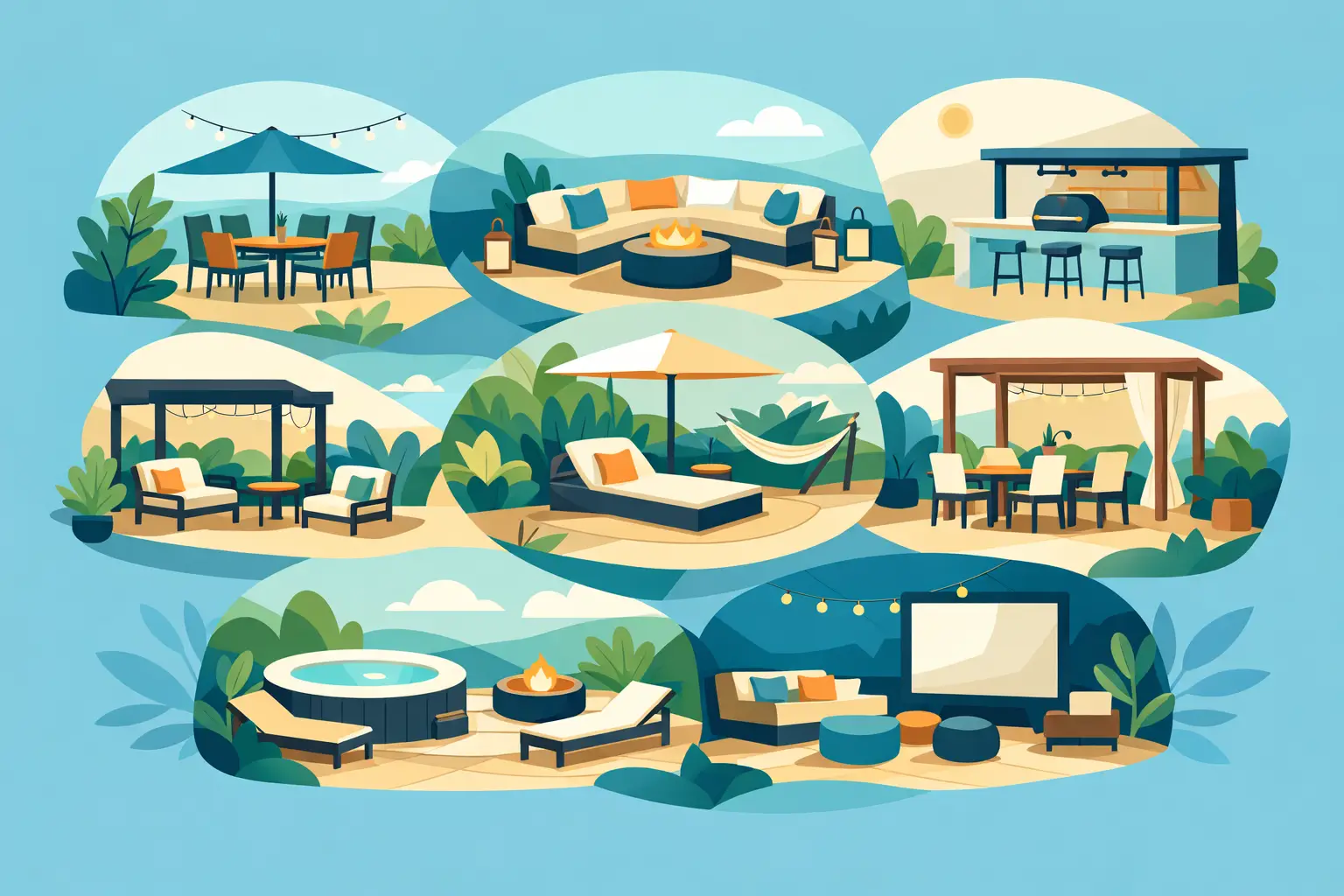
13 Apr 7 Best Patio Layouts for Entertaining
A patio can look beautiful in a photo and still fail the moment guests arrive. Chairs scrape past each other, the grill traps the cook in a corner, and everyone ends up gathering in the one spot that was never meant to be the social center. The best patio layouts for entertaining solve that before the first paver is set. They make movement feel easy, conversations feel natural, and the entire yard feel like an extension of the home.
That is the difference between decorating an outdoor space and designing one. A well-planned entertaining patio is not just about fitting in a dining table and a fire feature. It is about creating zones that work together, giving each part of the space a purpose while keeping the whole layout cohesive, comfortable, and visually refined.
What makes patio layouts work for entertaining
Entertaining puts more pressure on a patio than everyday use. A layout has to support circulation, food service, seating, lighting, and often multiple age groups at the same time. If the patio is too open, it can feel exposed and disconnected. If it is too crowded, guests feel boxed in and the space becomes hard to use.
The most successful layouts usually balance three things: flow, function, and atmosphere. Flow is how people move from the house to the patio, from dining to lounging, and through the yard without awkward bottlenecks. Function is how the space supports cooking, serving, gathering, and relaxing. Atmosphere is what makes the space feel inviting after sunset, during shoulder seasons, or on a casual weeknight when the gathering is smaller.
That balance looks different on every property. A narrow urban backyard in the GTA needs a different solution than a wide suburban lot with room for multiple hardscape levels. The right layout is never one-size-fits-all.
1. The dining-centered patio
For homeowners who host outdoor dinners often, a dining-centered layout is usually the strongest choice. In this arrangement, the dining table becomes the anchor, with generous clearance around it for chairs, serving access, and circulation back to the house.
This works especially well when the patio sits directly off the kitchen or rear entry. Guests can move in and out naturally, and whoever is serving food is not crossing through the entire yard to reach the table. If space allows, it helps to place a secondary seating area just beyond the dining zone. That gives the patio a natural rhythm – dining first, then lingering over drinks or conversation.
The trade-off is that dining furniture takes up more room than many homeowners expect. Once chairs are pulled out, a patio can feel tight very quickly. This layout needs proper scale and careful dimensioning to avoid a cramped result.
2. The lounge-first patio
Some patios are built less for formal meals and more for long evenings outside. A lounge-first layout prioritizes deep seating, conversational groupings, and a central feature such as a fire table, fireplace, or coffee table.
This format creates a relaxed, resort-like feel and often suits clients who entertain casually rather than hosting sit-down dinners. It also works well for families who want the patio to function as a true outdoor living room. Covered structures, layered lighting, and soft landscape edges can make this type of layout feel especially polished.
The weakness is obvious if you regularly host larger meals. Without a dedicated dining zone, people end up balancing plates on side tables or moving chairs around in ways the space was not designed to support. If dining matters even occasionally, a lounge-first patio should still leave room for a smaller bistro setup or adjacent dining extension.
3. The two-zone layout
One of the best patio layouts for entertaining is also one of the most versatile: a two-zone plan with distinct dining and lounge areas. This can be arranged side by side on one large patio or divided more intentionally with grade changes, planters, pergolas, or paving patterns.
The strength of this layout is flexibility. It supports different types of gatherings without asking one space to do everything. A family barbecue, a cocktail evening, and a birthday dinner all work better when guests can shift naturally between zones.
Design discipline matters here. If the two areas feel random or disconnected, the patio can read as oversized rather than purposeful. Material continuity, aligned sightlines, and consistent detailing are what turn separate zones into one cohesive outdoor environment.
4. The kitchen-and-bar layout
For clients who love hosting around food, an outdoor kitchen or bar can become the social engine of the patio. In this layout, cooking is not hidden at the perimeter. It is integrated into the entertaining experience, often with bar seating that lets guests gather while food is being prepared.
This is especially effective for larger properties and frequent hosts. It reduces the back-and-forth to the indoor kitchen and creates a stronger connection between prep, serving, and socializing. It can also increase the perceived luxury of the space when executed with the right materials and detailing.
It does require more investment and more planning. Utilities, ventilation, weather exposure, and traffic patterns all matter. A poorly placed kitchen can dominate the patio or push guests away from the most comfortable seating. The best versions feel integrated, not oversized.
5. The L-shaped patio layout
An L-shaped layout is useful when you want definition without walls. One leg of the patio might hold dining, while the other creates a lounge area or hot tub surround. The shape itself helps organize use, making the space feel more intentional without heavy visual separation.
This is a smart option for yards with architectural constraints, fences, or existing grade conditions that make a single rectangle feel too blunt. It also allows one area to stay more active while another feels quieter and slightly removed.
Because the shape directs movement, furniture placement becomes easier. But it also leaves less room for improvisation. If the proportions are off, one leg can feel generous while the other feels like an afterthought. Layout, scale, and edge treatment need to be handled carefully.
6. The courtyard patio
A courtyard-style patio creates a more enclosed entertaining experience. It may be framed by garden walls, privacy screens, planting beds, or the architecture of the house itself. The result is intimate, sheltered, and often highly effective for conversation and evening use.
This layout works well in upscale residential settings where privacy matters as much as function. It can also improve comfort on windy sites or in neighborhoods where homes sit close together. Strong enclosure gives the space a sense of destination, which tends to make entertaining feel more elevated.
Still, enclosure has to be balanced with openness. Too much screening can make a patio feel dark or confined, especially in smaller backyards. The best courtyard patios use layered planting, strategic openings, and thoughtful lighting to maintain both privacy and airiness.
7. The multi-level patio
When a property has slope or generous square footage, a multi-level layout can create some of the best patio layouts for entertaining because each level naturally supports a different use. Dining might sit closest to the house, with a few steps down to a lounge area, pool deck, or fire feature.
This approach creates visual interest and makes larger yards feel organized. It also helps separate activities without losing connection. Guests can spread out, but the gathering still feels unified.
The downside is complexity. Elevation changes need to feel safe, elegant, and easy to navigate, especially after dark or during larger events. Material transitions, stair width, railing decisions, and drainage all have to be considered early. When done well, though, the result feels custom in the best sense of the word.
How to choose the best patio layout for entertaining
The right layout starts with how you actually host. If most gatherings revolve around dinner, start there. If guests drift toward a fire pit and stay for hours, prioritize lounge space. If you host mixed groups with kids, adults, and frequent movement between indoors and outdoors, zoning becomes more important than any single feature.
Property conditions matter just as much as lifestyle. House access points, sun exposure, privacy, lot shape, and grading all influence what makes sense. A patio that gets harsh afternoon sun may need a covered dining zone. A long, narrow yard may benefit from linear movement and built-in seating instead of oversized furniture groupings.
This is where professional design makes a measurable difference. Good patio planning is not about adding more elements. It is about giving each element the right place, the right proportion, and the right relationship to the rest of the property. That is how a patio starts to feel effortless in use and refined in appearance.
At Redleaf Landscape Inc, that level of attention is what turns an outdoor project from attractive to truly livable. The patio should not just photograph well. It should host well, age well, and feel like it belongs to the home it serves.
The best entertaining spaces rarely happen by accident. They are shaped around real habits, real movement, and a clear vision for how outdoor living should feel once the guests arrive.