


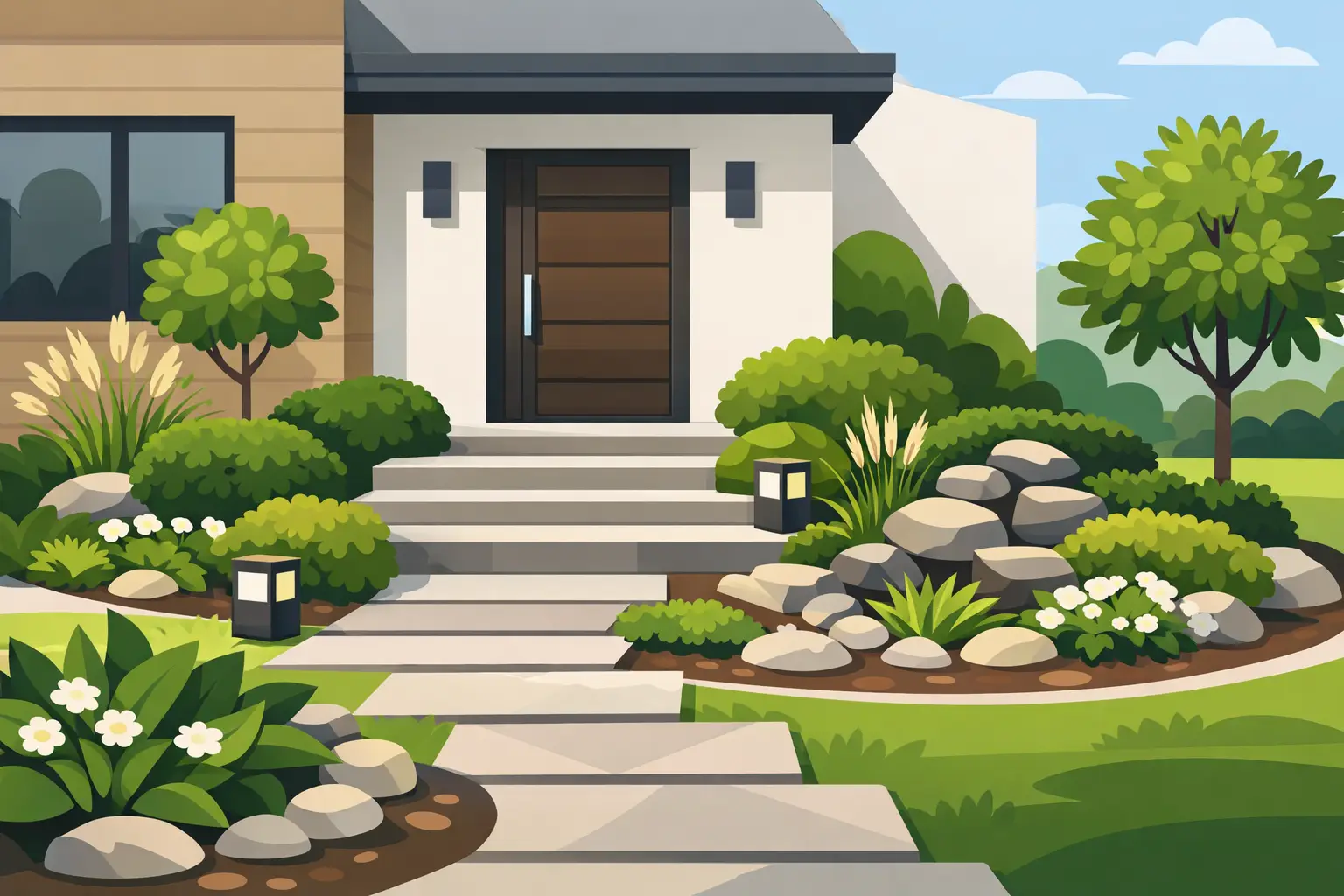
26 Mar Front Entrance Landscaping Design for Homes
A front entrance sets expectations before the door ever opens. When it feels balanced, welcoming, and well-built, the entire property reads differently. That is why front entrance landscaping design for homes is not just about planting a few shrubs near the porch. It is about creating a clear arrival experience that fits the architecture, supports daily use, and gives the home a finished presence from the street.
For homeowners investing in a premium exterior, the front entrance deserves the same level of thought as a kitchen renovation or custom interior finish. It is one of the few places where design, function, safety, and first impressions all meet at once. Done well, it adds value you see every day.
What strong front entrance landscaping design for homes really does
The best front entrances do more than look polished in a listing photo. They organize movement, frame the house properly, and make the property feel intentional. A good design guides guests from curb to door without confusion. It also makes everyday routines easier, whether that means carrying groceries, managing snow and rain, or welcoming visitors after dark.
There is also a scale issue that many homes struggle with. A builder-basic entry often looks undersized against the full width and height of the house. Landscaping helps correct that. Layered plantings, widened walkways, low walls, lighting, and well-placed stonework can give the entrance more visual weight so the front elevation feels composed rather than top-heavy or empty.
The practical benefit matters just as much. Front entries take heavy traffic and constant exposure. Materials need to hold up. Drainage needs to work. Plants need to suit the light, soil, and maintenance expectations of the homeowner. A beautiful concept only earns its keep if it performs over time.
Start with the house, not the plant palette
One of the most common mistakes in front entrance landscaping design for homes is treating the landscape as a separate decorative layer. In reality, the house should lead. Its architecture, finish materials, rooflines, and proportions should shape the landscape language.
A traditional home usually benefits from symmetry, structured planting, and classic material choices. A more contemporary home often looks stronger with cleaner lines, restrained plant selection, and bolder hardscape geometry. Natural stone may soften a formal facade or reinforce a timeless one. Large-format pavers can make a modern entry feel sharper and more current.
This is where custom design makes the difference. Two homes may have the same square footage, but if one sits high above grade and the other has a shallow setback, the entrance strategy changes. Steps, retaining features, and plant massing need to respond to those site conditions, not just to style preferences.
The arrival sequence matters more than most homeowners expect
A strong front entrance is experienced in motion. You see it from the street, then from the driveway, then from the walk, and finally from the threshold. Each view should feel connected.
That usually starts with the walkway. A narrow, straight path can work, but only if it fits the home and allows comfortable movement. In many cases, a slightly wider walk immediately improves the sense of arrival. It feels more generous and more in proportion to the house. If the approach is long, subtle curves or planting pockets can soften it. If the front yard is compact, simplicity may be the better choice.
Steps and elevation changes also deserve careful attention. They should feel substantial and safe, not like an afterthought added to solve grade. Broad steps, integrated landings, and clear edge definition make the entrance easier to use and visually stronger. This becomes especially important in climates with freeze-thaw cycles, snow, and wet seasons, where slip resistance and water management are not optional.
Planting should frame, not crowd
Planting is often the first thing people picture, but it should support the entrance rather than overwhelm it. The goal is to frame the architecture, soften hard edges, and provide seasonal interest without blocking windows, narrowing access, or creating constant pruning work.
Foundation planting works best when it has depth and hierarchy. That often means a structure of evergreen material for year-round presence, layered with deciduous shrubs, ornamental grasses, or perennials for texture and seasonal variation. The exact mix depends on the home and the owner’s maintenance expectations.
There is a trade-off here. Rich, layered beds can look exceptional, but they require more care than a restrained palette built around fewer, stronger plant masses. Neither approach is automatically better. It depends on how the property is used and how much ongoing attention the landscape will receive.
In many premium residential projects, restraint reads better than excess. Repeating a limited selection of high-performing plants often creates a more refined result than using too many varieties in a small space. The entrance feels calmer, more architectural, and easier to maintain.
Hardscape carries the design in every season
In regions where winter strips the landscape back, hardscape becomes even more important. Front steps, walkway materials, edging, porch extensions, and retaining features do much of the visual work when plants are dormant.
This is why craftsmanship matters. Poor alignment, uneven joints, weak base preparation, or awkward transitions will show up immediately at the front entrance because this is where the eye goes first. The same is true for material selection. The front of the home benefits from finishes that feel substantial and coherent with the architecture, not pieced together from unrelated styles.
Natural stone, quality concrete pavers, and custom masonry each have their place. The right choice depends on budget, aesthetic direction, and the rest of the property. What matters is consistency. A premium entrance should feel integrated with the driveway, porch, and facade materials rather than competing with them.
Lighting turns curb appeal into usability
A front entrance should look strong during the day, but it also needs to perform at night. Good lighting improves safety, clarifies edges, and gives the home a finished presence after sunset.
The most effective front entry lighting is layered. Step lights improve visibility and help define changes in elevation. Path lights guide movement. Accent lighting can highlight architectural elements, specimen plantings, or stone textures. The result should feel controlled and deliberate, not overly bright or scattered.
This is another place where balance matters. Too little light leaves the entrance flat and underwhelming. Too much creates glare and makes the space feel harsh. The goal is a warm, confident arrival experience that supports both aesthetics and function.
Sustainability should be built in, not added later
For many homeowners, sustainability is no longer a separate feature. It is part of good design. At the front entrance, that can mean selecting durable materials, choosing plants suited to local conditions, reducing unnecessary lawn area, and managing runoff properly so water does not collect near the house or on the walkway.
Low-maintenance does not have to mean plain. It means choosing materials and plantings that are appropriate to the site and the way the homeowner actually lives. If a family wants a polished front yard without constant upkeep, the design should reflect that from the beginning. If the priority is a lush, garden-forward look, the maintenance commitment should be understood upfront.
The best outcomes come from aligning visual goals with realistic performance expectations. That is where experienced design-and-build guidance becomes valuable, because details that seem minor on paper often determine how the entrance looks two or five years later.
When to invest in a full redesign
Some front entries only need refinement. Others need a complete rethink. If the walkway feels too small, the grading causes water issues, the steps look disconnected from the house, or the planting has outgrown the space, surface updates may not solve the real problem.
A full redesign makes sense when the entrance does not match the quality of the home, when function is compromised, or when multiple exterior elements need to work together. That might include the front walk, driveway edge, steps, porch area, planting beds, lighting, and drainage. Treating those elements as one integrated project usually delivers a stronger and more lasting result than updating them in pieces.
For homeowners who value quality, this is often the smarter path. It avoids the patchwork effect and creates a front approach that feels intentional from the start. Firms that handle design and installation under one roof can also reduce the disconnect between concept and execution. That level of accountability matters when the details are visible every time you pull into the driveway.
Redleaf Landscape Inc has built its reputation on that kind of end-to-end craftsmanship, helping properties feel considered, functional, and true to the people who live there.
A front entrance should never feel like filler space between the street and the door. When it is designed with purpose, it becomes one of the strongest statements a home can make – quiet, lasting, and impossible to mistake for ordinary.